


Food & Beverage Sustainability
- Oct 15, 2017
- 3 min read

[Source: http://archive.chewonki.org/sustainablefood/default.asp]
As we mentioned in previous blog, Food and Beverage sustainability is one of the trends in 2017. It is because more and more consumers started to concern where the food they buy and eat come from. Advertising and marketing in F&B also focus more on the eco-friendly aspect and sustainability. Therefore, it is inevitable for us to investigate in how F&B keep on being sustainable in the future.
Why sustainability in F&B arose people concern recently?

1. Food Packaging
It is obvious that when we buy a food or beverage, we will also consume its packaging. Use McDonalds’ as an example, during lunch period, the number of non-returnable packing distributed is over 200,000! However, all these plastic-made packaging do harmful to our living place. Over 90% of seabirds have been eating plastic and meanwhile, disposable plastic product is a common type of rubbish in Hong Kong Coast. Therefore, we have to make some changes.
[Source: https://m.hkgalden.com/view/411430]

2. Food Waste
According to some research, it has shown that only half of all food produced are eaten, that means, we are wasting up at least 50% of our food. According to government statistics, over 3000 tonnes of food waste disposed at landfills per day in HK. It shows that there is an urgency for us to reduce our food waste throughout the production chain.
[Source: https://www.cartoonstock.com/directory/f/food_waste.asp]
2 Ways to lead F&B Industry to sustainability

1. Increase public disclosure about agriculture sourcing
When a company need to disclose their business information to the public, they would be more aware of what they use and whey they do. The transparency of the company will also be increased. This can enhance the relationship between consumers and sellers, as they can know more about what they buy and where do they actually come from. In this way, consumers could be a monitor to track on sellers, lesser products which will damage the F&B sustainability will be imported and consumed.
[Source: http://www.eatthis.com/best-supermarket-shopping-tips-ever/]

2. Increase the incentives to go green
The main reason why there are so many disposable plastic products have been used is that people enjoy the benefits of being convenient. This can be directly related to McDonalds’ large amount of disposable plastic tableware as well. As it does not require consumers to bring anything, they can just take away the food they want by using these kind of non-reusable products. Therefore, we must increase public incentives to make the opportunity cost of not using disposable plastic products smaller. Just like the plastic bag levy tax, the effect is very significant, consumers do really consume less plastic bags then before. So, what is the next step? Can we also impose the levy tax to disposable plastic products? We should now start to consider about the F&B industry as well.
[Source: https://www.psychologytoday.com/blog/primed-perform/201511/the-fallacy-pavlovs-dog]
Successful Sustainability stories in the F&B Industry
1. Coca-Cola
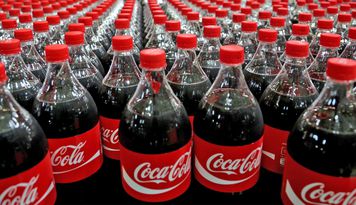
To be one of the largest beverage companies all over the world, Coca-Cola must have been generated many plastic bottles to meet the rapid demand needs. Therefore, they have invested the technology of using the renewable materials from plants to make plastic bottles and entered the market since 2009, so as to replace the fossil-based ingredients that was used to make the plastic bottle in Coca-Cola. They have saved more than 630,000 barrels of oil.


[Source: http://mashable.com/category/coca-cola/]
[Source: https://en.wikipedia.org/wiki/Coca-Cola]
2. Nestlé’s
Another famous company, a milk factory, Nestlé’s, they have adopted the policy of “zero water”. They have promised to consumers that they will not use any fresh local water resources. Whenever they need water to make any dairy products, they will extract from milk. In this case, at least 63 gallons of freshwater will be saved each year.


[Source: http://www.mizonews.net/wp-content/uploads/2015/08/Indian-Government-Orders-Nestle-To-Pay-426-Crores.png]
[Source: https://www.slideshare.net/sandscrooner/nestle-finall]
Undoubtedly, F&B Industry needs to bear a large responsibility in sustainability. Water, food, resources, these are all something that we cannot live without. To build a better environment for our future, let’s take actions!
Learning reflection
Food and Beverage is the necessity in our life. I used not to think anything about environmentally-friendly before I purchase food and drink. However, after looking into different statistics, I discovered that Hong Kong is really going too slow compare to other countries. When the technology of sustaining food and beverage is going to be more and more mature in other places, HK is still struggling with its first step. We must speed up so as to chase others' pace. We, consumers, bear our responsibilities as well. Therefore, I would try to influence my friends, family and classmates to be as green as possible.
References
[1] Farm to Table: Must's for Building a Green Strategy in Food and Beverage. Retrieved from: https://www.business.com/articles/musts-for-building-a-green-strategy-in-food-and-beverage/
[2] 6 TOP-OF-MIND CHALLENGES FOR THE FOOD & BEVERAGE INDUSTRY. Retrieved from:
https://enablon.com/blog/2017/06/01/6-challenges-food-beverage-industry
[3] 三個麥當勞不想讓你知道的秘密。Retrieved from: http://www.greenpeace.org/hk/news/stories/oceans/2017/09/donalds-three-secrets/
[4] Waste data & Statistics. Retrieved from: https://www.wastereduction.gov.hk/en/assistancewizard/waste_red_sat.htm
[5] Food and Drink Production – The Importance of Sustainability. Retrieved from: https://www.hps-pigging.com/food-and-drink-production-the-importance-of-sustainability/
[6] 3 ways food and beverage companies can lead on sustainability. Retrieved from: https://www.greenbiz.com/blog/2014/07/30/3-ways-food-and-beverage-companies-can-lead-sustainability
Comments