


Recent Trends & Challenges in F&B Operations
- Oct 15, 2017
- 4 min read

[Source: http://www.asiaone.com/asia/why-hospitality-students-head-switzerland]
Trends
The top trends for food and beverage operations in 2017 are as follows:
1. E-commerce

By 2018, experts predict that online food and drinks sales revenue will grow to $18 billion, an average 21.1% growth year-on-year since 2013. In the digital age, people are getting more and more reliable on the Internet, giving rise to the high demand on online ordering and doorstep delivery. People can order and get what they want by just staying indoor. Let’s take Amazon Fresh as an example, it provides grocery delivery service with a wide range of fresh groceries, including fruits, vegetables, chicken, steak or even pre-cut vegetables and prepared salads. Customers can order the groceries they want with their digital devices and the delivery will be provided right at their home or neighbouring locations at the chosen time. Taken the benefits of advanced technology, the food and beverage operations will continue to grow in this way.
[Source: https://www.smallbusinessheroes.co.uk/features/the-rise-of-home-delivery/]
2. Food Sustainability

Nowadays, customers’ awareness towards sustainability is growing. Customers may want to know more about the producers, the food sources and the methods of production. The information may directly affect what customers choose to buy when they shop for food or sit down to eat in a restaurant. To response to the customer requests, the companies are putting more and more emphasis to ensure that their products are in compliance with the customer standard. In Hong Kong, there are several restaurants that have adopted the practice of doing good for the environment and their customers. For example, The Peninsula Hong Kong have created a “Naturally Peninsula” menu focusing on nutritious and healthy cuisine from locally harvested sources.
[Source: http://blog.robinsonfresh.com/industry-trends/retail/growing-the-success-of-your-local-produce-program/]
3. Technology

Customers will research before they buy or consume, including food and beverages. Customers can simply do a quick search on their smartphones and get the information they want. For example, OpenRice, a famous food and restaurant guide website, proves a hit across Asia in these years. Customers can view the photos and reviews of the specified restaurant posted by other customers, and decide whether they would like to dine in there. Therefore, it is important for the industry to use digital and social platforms wisely, to promote their products to customers.
[Source: https://tecsynt.com/blog/development/restaurant-app-development-how-to-build-the-best-food-ordering-app]
Challenges
The food and beverage industry is an extremely competitive industry, facing pressures from consumers, competitors and the environment. The following are some present challenges faced by the industry.
1. Food safety

The concern over food safety keeps increasing in a global basis under the influence of the the reinforcement of the government official guidelines as well as growing emphasis among the general public. In Hong Kong, the Centre for Food Safety has the food safety control committee to monitor and assess the practice of food trade and facilitate the information-sharing system in case of any food safety problems occur. In recent years, there were quite a few food safety problems including contaminated meat sold in McDonald’s, gutter oil from Taiwan inflow to Hong Kong, food poisoning in relation to sandwiches imported from Taiwan. These problems has caused strong social repercussion and raise the public awareness on food safety. Therefore, the food and beverage industry needs to step up its food safety regulation so as to ensure confidence in safe food of consumers.
[Source: http://foodsafetyhelpline.com/2016/04/fssai-notifies-list-recognised-food-testing-laboratories/]
2. Quickly changing food trends and consumer demands
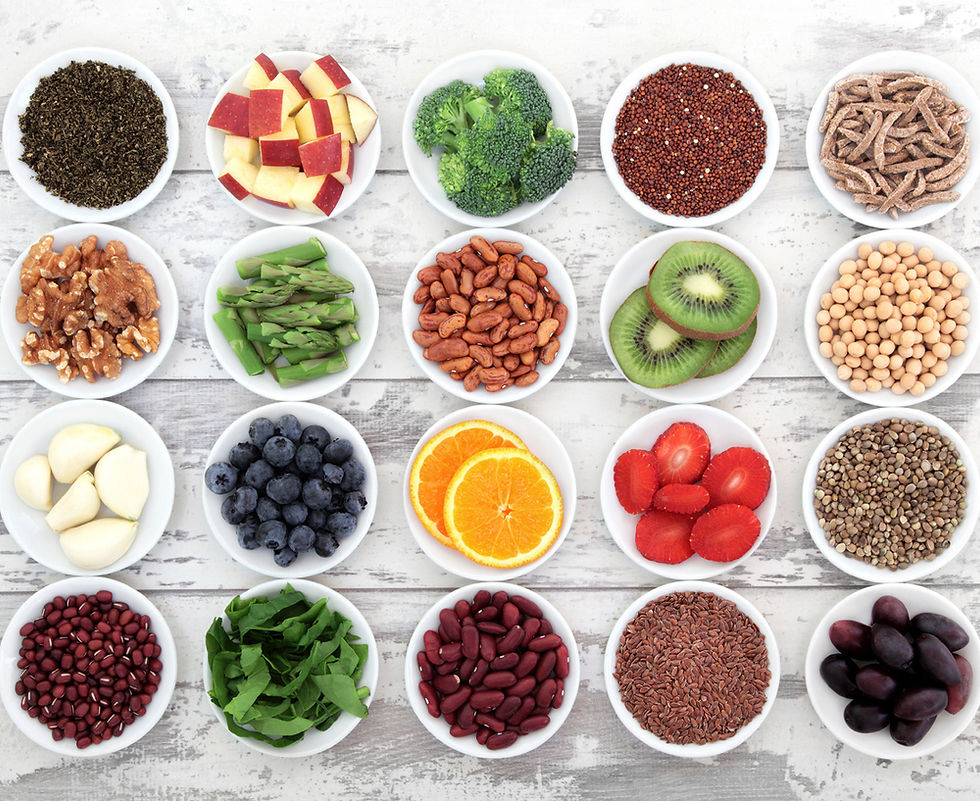
Food trend keeps changing over years. Like few years ago, fusion food gained high popularity. In recent, super food such as quinoa, kale and avocado become the new trend. Fads can come and go in just a short period of time, making the food and beverage industry hard to follow. Apart from food trend, customers also keep adjusting their food preference and requirements. For example, there is an increasing number of consumers emphasize healthy eating style with some of them are vegetarian and some may lay much emphasis on low seasoning. So it is quite common to see restaurants offering extra choices like the vegetarian diet or meal in mild flavour to satisfy different customer with special requirements. Satisfy consumers’ need seems to be even more challenging in Hong Kong which is a city acclaimed as the Food Paradise with a great amount of food choices.
[Source: https://foodandnutrition.org/blogs/stone-soup/7-considerations-going-vegetarian-vegan/]
3. Pressure to be environmentally friendly

It is quite often to see that restaurants use the disposable utensils, ranging from plastic straws to plastic plates. This practice is especially obvious in the fast food chains. The reason behind is mainly because this help the restaurant to ease the burden of the washing procedure so this can not only speed up the whole operation process, but also lower the labor cost. However, throughout these years, green groups such as Green Sense advocate the idea of waste reduction to achieve sustainability. This add great pressure to the food and beverage industry to maintain the efficient operation and to balance the operation costs.
[Source: http://knswb.org.au/sustainable-business-highlight-vatel-restaurant/]
Learning Reflection
With the exploration of the trends and challenges of the F&B operation, I truly understand that running the F&B operation is definitely not easy. Trends are fast-moving and this creates unceasing challenges for all the individual businesses. Both global chain and small-scaled independent F&B businesses cannot avoid the challenges. Therefore, it is quite a pity that many small-scaled independent F&B businesses could not withstand the challenges and shutted down. In order to maintain competitiveness within the industry and sustain the business, it seems that all the F&B businesses have to adapt themselves to the ever-changing environment by making great effort.
References
[1] 9 CHALLENGES FACING PROCUREMENT IN THE FOOD AND BEVERAGE INDUSTRY. SpendEdge. (n.d.). Retrieved from:
https://www.spendedge.com/blogs/9-challenges-facing-procurement-food-beverage-industry
[2] 6 TOP-OF-MIND CHALLENGES FOR THE FOOD & BEVERAGE INDUSTRY. enablon.com. (2017, Jun 1). Retrieved from:
https://enablon.com/blog/2017/06/01/6-challenges-food-beverage-industry
[3] The Food and Beverage Industry’s Biggest Challenges in 2017. kbic. (2017, Jan 12). Retrieved from:
http://www.kbic.com/blog/food-science-recruiting/food-and-beverage-biggest-challenges-2017/
[4] Food & Beverage Ecommerce: How Online Shopping Impacts The Supply Chain. Supply Chain Management Review (2017, Sept 6). Retrieved from:
http://www.scmr.com/article/food_beverage_ecommerce_how_online_shopping_impacts_the_supply_chain
[5] Top 2017 Trends for Food and Beverage Industry Business. RSM (2017, Jan 11). Retrieved from:
http://rsmus.com/what-we-do/industries/consumer-products/food-and-beverage/top-2017-trends-for-food-and-beverage-industry-businesses.html
Comments