


Recent Trends and Challenges of F&B Managed Services in Different Service Sectors
- Nov 24, 2017
- 6 min read

[Source: http://dohalife.com/shaqab-abela-catering-service-review/]
For companies with core business other than food & beverage services, they would actually outsourced the F&B to other specialists in this field, which is called managed services. This is becoming more and more common in Airline & airport, education and health care industry. This article is going to analyze and examine the trends and challenges of F&B managed services in these 3 industries.
Airlines & Airport
Trends
1. Technological Advancement
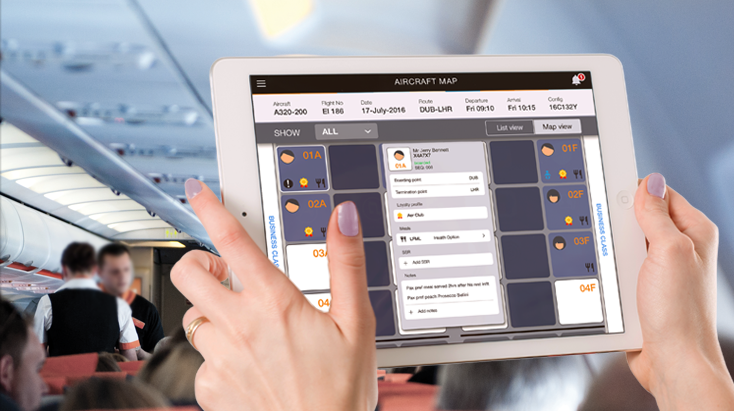
Advancement in technology has facilitated the operations of airline and airport catering services. Currently, many airline companies and airports make use of the advanced technology for providing an innovative F&B experience to passengers. For instance, Emirates started to use the Meal Ordering Device (MOD) to take customers’ orders and deliver to their seats as requested. Delta airline has also offered its cabin crew a Nokia Lumia smartphone which has a function similar to the traditional point-of-scale (POS) . Therefore, the use of technology in food ordering is one of the trends of airline and airport F&B services.
[Source: http://www.arconics.com/airline-cabin-management-paxapp/]
2. Collaboration with Famous Chefs
Special menus can surprise customers, which encourages more and more airlines and airports to partner with various F&B companies and famous chefs to offer different cuisine. For example, Air France has partnered with a Michelin chef and Foodora in 2016 while in 2014, Kulula.com and Robertsons Herbs and Spices have also collaborated to surprise the passengers of some low-cost carriers from South Africa with a three-course fine dining experience. So, collaboration between airlines and airports with different F&B parties is definitely a trend to follow in the industry.
[Source: https://youtu.be/9DybVD3iJkQ]
Challenges
1. Difficult to Maintain Food Hygiene

One of the challenges is to ensure the food quality and hygiene are up to standards as there are many difficulties and constraints to be taken into accounts in a flight. The CEO of Baltic Ground Services has once mentioned in an interview that there are actually many limitations in food preparation and storage at an altitude of up to 35,000ft. For instance, there are limited spaces in the cabin for cooking the meals, so almost most of the cooking are done on the ground, which means there are time gaps between the food preparation and when they are actually served. Moreover, due to the relatively low humidity in the aircraft cabin, extra attention should be paid to the maintenance of food hygiene. Hence, it is of utmost importance for the airline and flight passengers to be careful in keeping the food hygienic.
[Source: http://www.sancakinflight.com/en/hizmetler_detay.aspx?ID=5]
2. Complex Logistical Operations

Supply chain for in-flight catering is relatively more complicated and difficult to manage. As mentioned, there are limited or even no space for food preparation, so airline would forecast the demand, prepare the food in kitchens on ground and deliver the cooked food to the flight right before it takes off. Therefore, a flexible and responsive logistics system is required for the operations. If the logistic system is not well-organized and there is any delay of delivery, the in-flight catering may be seriously affected. Thus, another challenge for airline & airport catering is to deal with the complex logistics.
[Source: http://www.pinsdaddy.com/lsg-sky-chefs_8ui4xZ4aqMWJBEZOlwv21eqKUgC7AbICdGHZNOrPQiQ/]
Schools Trends
1. Fast Food Chain

Many fast food chains have joined the student catering industry to supply lunch boxes in primary and secondary schools. Let’s take Hong Kong as an example, three main fast food chains including Café de Coral, Fairwood Fast Food and Maxim’s Group created their own sublines, namely Luncheon Star, Professional Institutional Catering Ltd. and Hearty Meal respectively. In order to obtain the license for supplying lunch boxes, the service providers have to comply with the food safety and hygiene standards established by the Food and Environment Hygiene Department. Good nutrition as well as environmentally-friendly practices are also encouraged among the industry.
[Source: http://the-sun.on.cc/cnt/news/20151227/00407_031.html]
Challenges
1. International Taste

Nowadays, there is an increasing number of non-locals studying in Hong Kong, not only in universities, but also high schools. Due to their diverse cultural and religious backgrounds, they have different dietary habits as well as food taboos. For example, Indian who practices Hinduism is prohibited from eating a cow because it is believed that cow is God’s useful gift to mankind, while Islamic and Muslim people avoid eating pork due to their religious and cultural reasons. Therefore, it is crucial for providers to offer various kinds of meal for students to choose as to respect their own cultures and religions, be it easy or difficult.
[Source: http://www.intostudy.com/en-gb/universities/nankai-university/living/food]
2. Good Nutrition

Good nutrition is important for students, especially for those experiencing puberty. Consuming an adequate and balanced healthy diet during puberty is necessary both for proper growth and normal pubertal development. In Hong Kong, the “EatSmart@school.hk” Campaign has been launched by the Education Bureau and the Department of Health since 2006, to improve the eating habits of students. It also issued new Nutritional Guidelines to guild service providers to provide balanced diets to students. Therefore, service providers should plan the lunch sets for schools carefully, particularly primary and secondary schools, with considerations of nutrition value, as well as cost control and taste of food.
[Source: http://www.cookinglight.com/healthy-living/college-food-todayd]
Healthcare
Trends
1. Complex System in Central Kitchen

Nowadays, central kitchens in healthcare industry become more and more complex under the advanced system. Besides from the automatic tray lines for meal assembly, there are integrated computer systems linking up the central kitchen and wards and allow the nurses to place different meal orders according to the dietary requirements of the patients. Moreover, an increasing number of healthcare kitchens has expanded their food preparation scopes to offer cook-serve, cook-chill, and even sous vide, creating more varied meal options in different cooking styles.
[Source: http://inside.lhsc.on.ca/article/fall-2014/did-you-know]
2. Customized Meal Plan
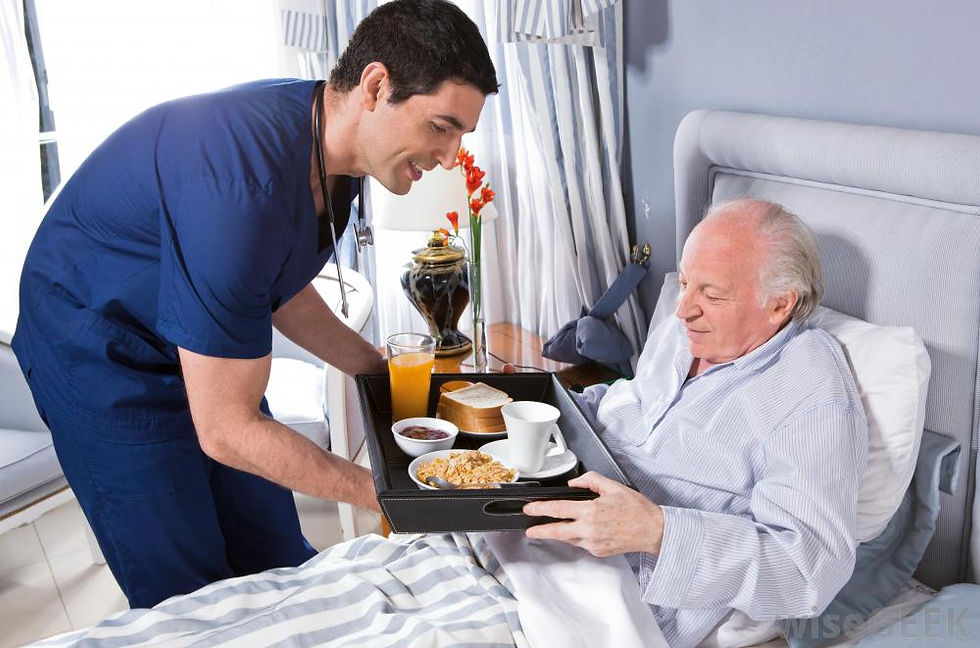
Meals offered in healthcare facilities are no longer unitary and tasteless. Instead, a variety of diet options are provided to the consumers including the patients and elderly people based on their health conditions and special diet requirements. For example, meals served in hospitals are basically categorised into three types which are normal, mushy and fluid diet in order to ensure safety of the food intake by the patients. Moreover, special meals such as vegetarian and Halal meals are also provided to meet the specific needs of the diversified customer groups.
[Source: http://resizing.info/openphoto.php?img=http://images.wisegeek.com/nurse-giving-man-food-in-hospital.jpg]
Challenges
1. Escalating Demand

Due to aging population and increasing number of people with chronic diseases, demand for medical or healthcare service keep rising and this adds heavy burden to the food and beverage service within the healthcare facilities including the hospitals and retirement homes. This is not a problem faced by Hong Kong solely, but many countries around the world as well. For instance, the number of patients in US healthcare system is increasing. Accordingly, 58 percent of hospitals reported serving more patient meals in 2016 than in the past, creating a great impact on the healthcare food service.
[Source: https://www.bmow.org]
2. Striving for Higher Quality

Although people usually have a bad perception on meals provided in the healthcare facilities, the healthcare sector has laid more emphasis on improving the quality of the healthcare food service in terms of diet nutrition, food taste as well as menu variety in order to raise the overall service quality in the industry. For better diet nutrition, other than the basic meal set, additional supplements including fresh fruit and nutritious drinks are offered. To improve the food taste and menu variety, hospital authority designs new menu items and invites volunteers to conduct food tasting and evaluation.
[Source: https://modernfarmer.com/2014/12/farm-hospital-bed/]
Learning Reflection I originally thought that the managed services of food services operations on various services sectors are mostly the same. However, after the lecture and online research, I found that the practices and characteristics in each sector are actually diverse. For example, primary schools, military industry and healthcare industry focus mainly on food nutrition, while military industry and colleges require greater portions. On the other hand, some trends are shared among different services sectors, such as the increasing concern on food safety, quality and cost control. With the growing market of managed services, it is important to maintain the quality of food as well as overall service quality.
Reference
[1] Trends in Healthcare Food Service—RX for Revenues. Nestle Professional. (2015, Jan 16). Retrieved from: https://www.nestleprofessional.us/nutrition/trends-healthcare-food-service-rx-revenues
[2] Food safety issues and trends in healthcare foodservice. (2016, April 27). Retrieved from: http://www.foodprotect.org/media/biennialmeeting/henroid-foodsafety-issues-in-healthcare-foodservice-cfp-20160416.pdf
[3] 5 Trends in Healthcare Foodservice that Matter. BauscherHepp. (2017, Feb 27). Retrieved from: http://deepplate.bauscherhepp.com/blog/5-trends-in-healthcare-foodservice-that-matter
[4] Raymond Kollau. (December, 2017). Air France and star chef Joël Robuchon partner with Foodora to promote their cuisine. Retrieved November 18, 2017, from http://www.airlinetrends.com/2016/12/12/air-france-joel-robuchon-foodora-montreal/
[5] Raymond Kollau. (Januaray, 2017). Airlines and airports let passengers pre-order food via mobile apps. Retrieved November 18, 2017, from http://www.airlinetrends.com/2016/01/15/choice-convenience-food-beverages-pre-ordering-airlines-airports/
[6] Raymond Kollau. (April, 2014). South African LCC kulula partners with Unilever to surprise passengers with free meal. Retrieved November 18, 2017, from http://www.airlinetrends.com/2014/04/15/kulula-com-unilever-robertsons-surprise-passengers-free-meal/
[7] Raymond Kollau. (September, 2009). Delta provides cabin crew with Nokia Lumia ‘onboard retail’ smartphones. Retrieved November 18, 2017, from http://www.airlinetrends.com/2013/09/13/delta-cabin-crew-nokia-lumia-onboard-retail-smartphone/
[8] Business Air News.(October 10, 2013). Hygiene, preparation and washing up: a few challenges for in-flight catering. Retrieved November 18, 2017, from http://www.ebanmagazine.com/mag_story.html?ident=11011
[9] Filipe Janela. (November 4, 2016). How to beat the 5 deal breaker challenges in Airline Catering. Retrieved November 18, 2017, from http://www.processwaregroup.com/en/blog/how-to-beat-the-5-deal-breaker-challenges-in-airline-cateringJordi
[10] Alemany. Inflight Catering is 70% logistics and 30% cooking. Retrieved November 18, 2017, from https://jordialemany.wordpress.com/inflight-catering-is-70-logistics-and-30-cooking/
[11] ENTERTAINAHOLICS. (November 19, 2016). Challenges And Recent Trends Of Food And Beverage Sservice Of Aitlines And Airport. Retrieved November 18, 2017, from https://entertainaholics.wordpress.com/2015/11/09/challenges-and-recent-trends-of-food-and-beverage-service-of-airlines-and-airport/#_ftn1
[12] Raymond Kollau. (April, 2017). Emirates crew use smartphones to take Business Class passengers’ F&B orders. Retrieved November 18, 2017, from http://www.airlinetrends.com/2017/04/03/emirates-meal-ordering-device-business-class/
[13]The Daily Meal (May, 2014) .Food Taboos Around the World. Retrieved November 18, 2017, from https://www.huffingtonpost.com/the-daily-meal/food-taboos-around-the-wo_b_5007938.html
[14] The Education Bureau. (November, 2017). "EatSmart@School.hk" Campaign. Retrieved November 18, 2017, from http://www.edb.gov.hk/en/curriculum-development/major-level-of-edu/life-wide-learning/eatsmart/index.html
Comments