


Cultural Impacts of Tourism
- Oct 1, 2017
- 3 min read

[Source: Own]
Remember a time when you went abroad and had a great time under a different cultural background that makes you feel excited or shocked? As a tourist, it may be an excellent experience and a great way to widen horizon. However, the lifestyle and perception of local people, as well as the community as a whole may be affected, positively and negatively.
Positive Impacts
1. Preserving local culture

To boost tourism, huge money is invested to preserve the local culture. For instance, China has a fruitful historical background, which attract many tourists from all over the world every year. To sustain its position as one of the world’s leading tourism destinations, the central government has issued guidelines on preserving and developing excellent traditional culture in 2017. Specific tasks, such as protecting traditional Chinese villages and historic architecture, and supporting Chinese poetry, music and painting, were listed in the guidelines.
[Source: http://www.momentousasia.com/tibet/]
2. Fostering sense of identity

A sense of identity defines who we are and how we different from everybody else. When one's culture is concerned by others, his identity will be strengthened. Tai Hang Fire Dragon Dance, one of the famous traditions in Hong Kong, attracts many tourists and locals every year on the days near Mid-Autumn Festival. Being a member in the society, appreciation towards one's local tradition will reinforce his pride in culture, as well as sense of identity.
[Source: http://www.discoverhongkong.com/ca/see-do/culture-heritage/living-culture/tai-hang-fire-dragon-dance.jsp]
3. Encouraging cross-cultural exchange

In developing countries, tourists bring in new and odd experience to the local community, helping them to know more about the outside world. On the other hand, in developed countries, active interaction between tourists and residents can consolidate their role as an international city.
[Source: http://www.telltale.co.uk/what-we-do/developing-great-visitor-experiences/]
Negative Impacts
1. Cultural conflicts between residents and tourists
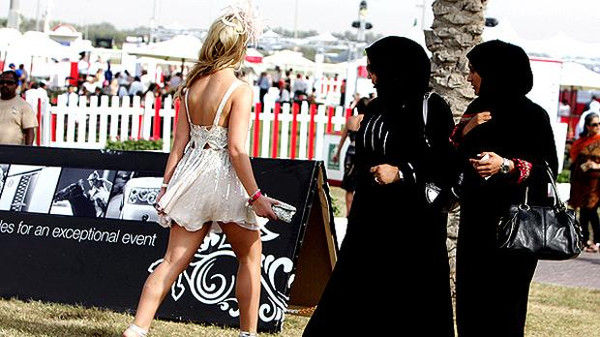
Tourists often, carelessly or ignorantly, fail to respect local customs and moral values. For example, in many Muslim countries, there are strict standards regarding Muslim women‘s appearance and behaviour, which is, they must carefully cover themselves in public. However, tourists in these counties are often unaware of, or even disregard these standards, ignoring the necessary dress code which sticks to the local standards, appearing half-dressed in revealing shorts, skirts or even bikinis. Conflicts may then occur.
[Source: http://english.alarabiya.net/en/perspective/features/2014/05/24/Qatar-dress-code-campaign-expat-tourist.html]
2. Loss of customs and traditions

Most of the traditions are relatively fragile and vulnerable. The behaviour of tourists can be an incentive for local people not to respect their own traditions and religion anymore. They may copy the modernized behaviour and lifestyles of tourists through the demonstration effect. Some of them may no longer be willing to dress in traditional clothing or behave in a manner that is mutually accepted by the community. Native customs and traditions may then be weakened, or even lost someday.
[Source: https://www.lonelyplanet.com/travel-tips-and-articles/thirty-five-unbelievable-love-and-marriage-customs-of-the-world]
3. Commercialization of local culture

Tourism can turn local culture into commodities when religious traditions, local customs and festivals are changed to conform to tourist expectations. It is hence resulted in a situation called ‘reconstructed ethnicity’, which refers to those made-for-tourist identities that emerge in response to the pressures placed on them.
[Source: Own]
Learning Reflection
I like travelling, especially to some places which are famous for its colourful cultural backgrounds. However, flourishing tourism has made their cultures commercialized, which are irretrievable. Let's take Tibet as an example. It was originally a state with colourful religious background, where many Buddhist monks around the streets. But now, some of the locals may wear the gowns, acting as monks and asking the tourists for money. This harms traditional cultures of the place, as well as people's perceptions towards the religion.
Reference
[1] China issues guidelines to preserve traditional culture. Retrieved from http://www.china.org.cn/arts/2017-01/26/content_40182041.htm
[2] Sense of Indentity. Retrieved from https://psychologydictionary.org/sense-of-identity/
[3] Tai Hang Fire Dragon Dance. Retrieved from http://www.discoverhongkong.com/eng/see-do/culture-heritage/living-culture/tai-hang-fire-dragon-dance.jsp
[4] Show respect! Qatar ‘dress code’ shocks expats. Retrieved from http://english.alarabiya.net/en/perspective/features/2014/05/24/Qatar-dress-code-campaign-expat-tourist.html
[5] Demonstration effect. Retrieved from https://en.wikipedia.org/wiki/Demonstration_effect
[6] Tourism and ethnicity (2006). Retrieved from http://socialsciences.scielo.org/pdf/s_ha/v1nse/scs_a01.pdf
Comments